Choosing the Right Water Damage Restoration Company in Murray, UT
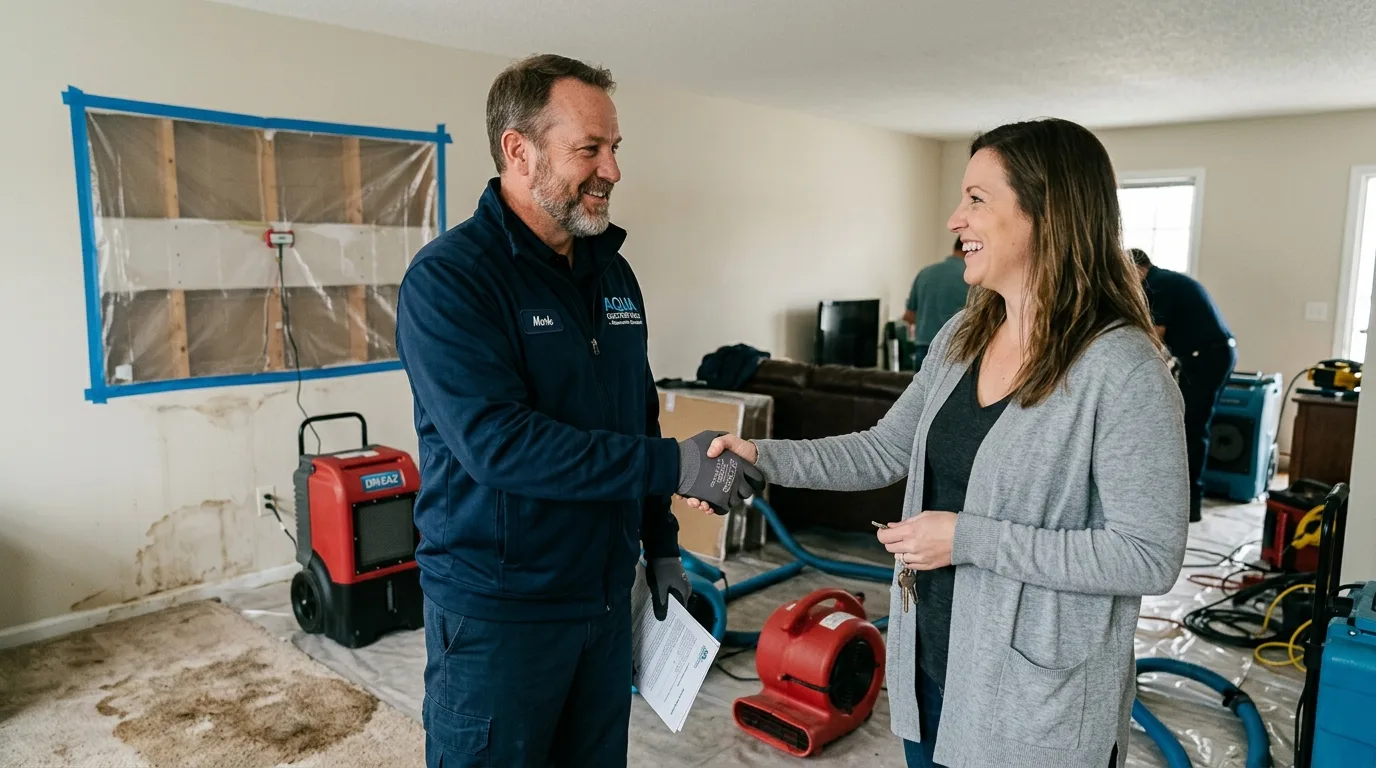
Murray homeowners who choose the right water damage restoration company after a basement flood return to a fully dry, documented, insured repair. Those who choose the wrong company often end up paying twice — once for the original work that left residual moisture in the wall assembly, and again for the mold remediation and reconstruction that follows six weeks later. The difference is almost never price. It comes down to a handful of verifiable factors that you can check before you hire. In this post, we cover exactly what to look for when selecting a water damage restoration company in Murray — and what to avoid.
Need a Water Damage Restoration Company in Murray?
Murray Water Damage Restoration is IICRC certified and serves all of Salt Lake County. Call (877) 698-1311 for 24/7 emergency response.
Why the Choice Matters More After Water Damage Than After Other Contractors
Choosing the wrong plumber typically results in a repair that needs to be redone. Choosing the wrong water damage restoration company can result in structural deterioration and mold colonization inside wall assemblies that is invisible for weeks — and then very expensive to remediate correctly.
The core reason: water damage restoration is a science of measurement. Professional restoration is not about removing standing water and running fans. It is about achieving specific target moisture content in specific materials (drywall below 12% MC, framing below 16% MC, concrete below surface-dry standard) and documenting that those targets were achieved before reconstruction begins. Companies that do not measure cannot certify the work. Companies that cannot certify the work are not doing restoration — they are doing cleanup.
In Murray’s spring and summer seasons, when the city’s clay-heavy soils maintain elevated moisture pressure against foundations in Murray Southeast, Murray East, and City Center, partial drying that leaves residual moisture in wall assemblies is not unusual from under-equipped companies. Mold grows in those assemblies while the homeowner believes the work is complete.
What IICRC Certification Actually Means
The Institute of Inspection, Cleaning and Restoration Certification (IICRC) sets the standards that govern professional water damage restoration. The two most relevant standards for residential work are:
- IICRC S500: The Standard for Professional Water Damage Restoration. Governs extraction, moisture mapping, drying equipment placement, and clearance criteria for water events.
- IICRC S520: The Standard for Professional Mold Remediation. Governs containment, physical removal protocols, and post-clearance air testing for mold work.
IICRC-certified technicians have completed coursework and examinations on these standards. IICRC-certified firms employ a minimum number of certified technicians and maintain equipment standards.
When evaluating a water damage restoration company in Murray, certification status is verifiable — you can ask for technician certification numbers. Companies that cannot produce current certifications are not certified regardless of what their website claims.
IICRC certification does not guarantee quality — a certified technician can still cut corners. But it establishes a baseline competence standard and provides a framework for what the completed work should document.
Red Flags to Avoid
No moisture readings or documentation: Any company that cannot show you moisture meter readings before, during, and at clearance is not doing professional restoration. If they cannot show you a drying log — a dated record of material moisture content across drying cycles — do not hire them.
Unusually low bids: Water damage restoration uses industrial-grade equipment: truck-mounted extractors, LGR dehumidifiers, air movers, thermal imaging cameras, and moisture meters. Companies with unusually low bids are typically operating with consumer-grade equipment that cannot achieve the airflow and humidity reduction targets required for certified drying. The difference in equipment cost is the difference in outcome.
Pressure to skip the insurance process: Legitimate companies work with your insurance carrier. Companies that pressure you to pay out of pocket to avoid “making your rates go up” or that offer discounts for cash payment outside the claims process should raise immediate concern. Insurance documentation — including a scope of work, moisture logs, cause-of-loss documentation, and a final report — is a standard deliverable of professional restoration.
No written scope of work: Before work begins, you should receive a written scope of work that identifies affected materials, drying methodology, and estimated timeline. Companies that begin work without a written scope have no framework for accountability.
Unlicensed or uninsured contractors: Utah requires licensed contractors for work involving structural materials. Verify contractor status through the Utah Division of Occupational and Professional Licensing at dopl.utah.gov.
Murray Water Damage Restoration — IICRC Certified, Fully Documented
We provide complete moisture logs, cause-of-loss documentation, and direct insurance billing for all Salt Lake County water events. Call (877) 698-1311.
Questions to Ask Before You Hire
Ask every company you evaluate these questions before signing anything:
- Are your technicians IICRC certified? Ask for certification numbers and verify independently if the dollar amount warrants it.
- What drying equipment will you use? Acceptable answers include specific references to dehumidifier type (LGR or desiccant for residential work), air mover quantity based on affected area, and moisture meter model. Vague answers (“industrial equipment”) are not sufficient.
- Will you provide a drying log with daily moisture readings? The correct answer is yes, automatically, as part of the standard deliverable.
- Do you work directly with insurance carriers? Legitimate companies bill insurance directly and provide adjuster documentation. If the answer is no, ask why.
- What is your mold protocol if mold is discovered during the project? The answer should reference IICRC S520 and describe containment, air scrubbing, and post-clearance testing by an independent hygienist.
- Do you subcontract any of the restoration work? It is common to subcontract reconstruction (drywall, flooring) but not acceptable to subcontract the extraction and drying itself to uncertified crews.
Why Local Knowledge Matters in Murray
Murray’s specific water damage risk profile — expansive clay soils, concentrated spring flooding in Murray Southeast and Murray Park, older housing stock with compromised original waterproofing in City Center and Murray East, summer monsoonal storms that produce Category 2 surface water — requires a company that understands how these local conditions affect drying timelines and material response.
Clay-soil environments maintain elevated ambient moisture that extends drying timelines compared to the IICRC S500 standard charts developed for average conditions. A company unfamiliar with Murray’s spring conditions may declare clearance based on standard drying charts and leave residual moisture in materials that are still wet due to the local ambient conditions. Our team uses extended monitoring periods during March through May for exactly this reason.
The water category also matters locally. Flood cleanup in Murray after a spring basement event frequently involves Category 2 or Category 3 water from surface runoff or sewage cleanup from sewer backup events — not the clean Category 1 water that simple extraction handles. A company that does not assess water category on arrival and adjust its protocols accordingly is creating health hazards, not resolving them. Read our post on emergency water extraction in Murray for more on how professional extraction and water categorization work together.
Insurance Documentation: A Non-Negotiable Deliverable
A professional water damage restoration company in Murray provides complete insurance documentation as a standard part of the completed project. This documentation includes:
- A signed cause-of-loss statement identifying the event, date, and water source
- Moisture mapping showing pre-drying and post-drying material readings
- A complete scope of work and itemized estimate formatted for adjuster review
- Photos at each stage: upon arrival, during extraction, during drying, and at clearance
- A final clearance report confirming all materials reached target moisture content
Without this documentation, your insurance claim faces a harder path. Adjusters reviewing undocumented claims may reduce settlement offers, require independent inspection, or dispute scope items. Documentation produced by the restoration company is the adjuster’s primary reference. Read our complete guide on how to file a water damage insurance claim in Utah and our overview of what Utah homeowners insurance covers for water damage for more on the claims process.
Mold Remediation Capability
Any water damage restoration company you hire in Murray should have in-house mold remediation capability — or a clear, established referral protocol to a certified mold remediation firm. Water damage events that are not dried within the IICRC’s 24 to 48 hour critical window frequently produce mold growth requiring remediation before reconstruction. If the company you hire lacks this capability, you will be starting over with a second company when mold is discovered.
Read our post on mold after water damage in Murray to understand when mold remediation becomes necessary after a water event.
Frequently Asked Questions
How do I verify that a water damage restoration company in Murray is actually IICRC certified?
Ask for the technician’s name and IICRC certification number, then verify at the IICRC’s online certification lookup. Also verify the company holds current IICRC Certified Firm status, which requires employment of certified technicians and documented equipment and process standards. Certification claims on a website alone are not verification.
Should I call my insurance company before calling a water damage restoration company?
You can call your insurance company first to report the claim, but you do not need to wait for adjuster approval before beginning extraction. Most Utah homeowners policies require prompt mitigation — delays that allow damage to worsen can be used to reduce claim settlements. Call the restoration company immediately for extraction. Your carrier can inspect during the active drying phase.
Is a national franchise or a local water damage restoration company better for Murray homeowners?
Both can be excellent or poor depending on specific technician quality. The key question is whether the technicians who arrive at your door are IICRC certified, whether they use calibrated professional-grade equipment, and whether they understand Murray’s local soil and seasonal conditions. Ask the same qualifying questions of any company, national or local.
What happens if I discover mold weeks after a water damage company said the work was complete?
Request the drying log and moisture clearance documentation from the original company. If the documentation shows clearance readings that are inconsistent with mold growth in those locations, you have grounds for a dispute. If documentation was never provided, you have a stronger argument that the work was not professionally completed. Contact the Utah Division of Occupational and Professional Licensing if the contractor was licensed and you believe the work was substandard.
Murray Water Damage Restoration — IICRC Certified, Salt Lake County
Murray Water Damage Restoration provides complete extraction, structural drying, mold remediation, and insurance documentation. Call (877) 698-1311 for 24/7 emergency response.
Related: