Spring Snowmelt Floods Basements in Murray, UT: What to Know
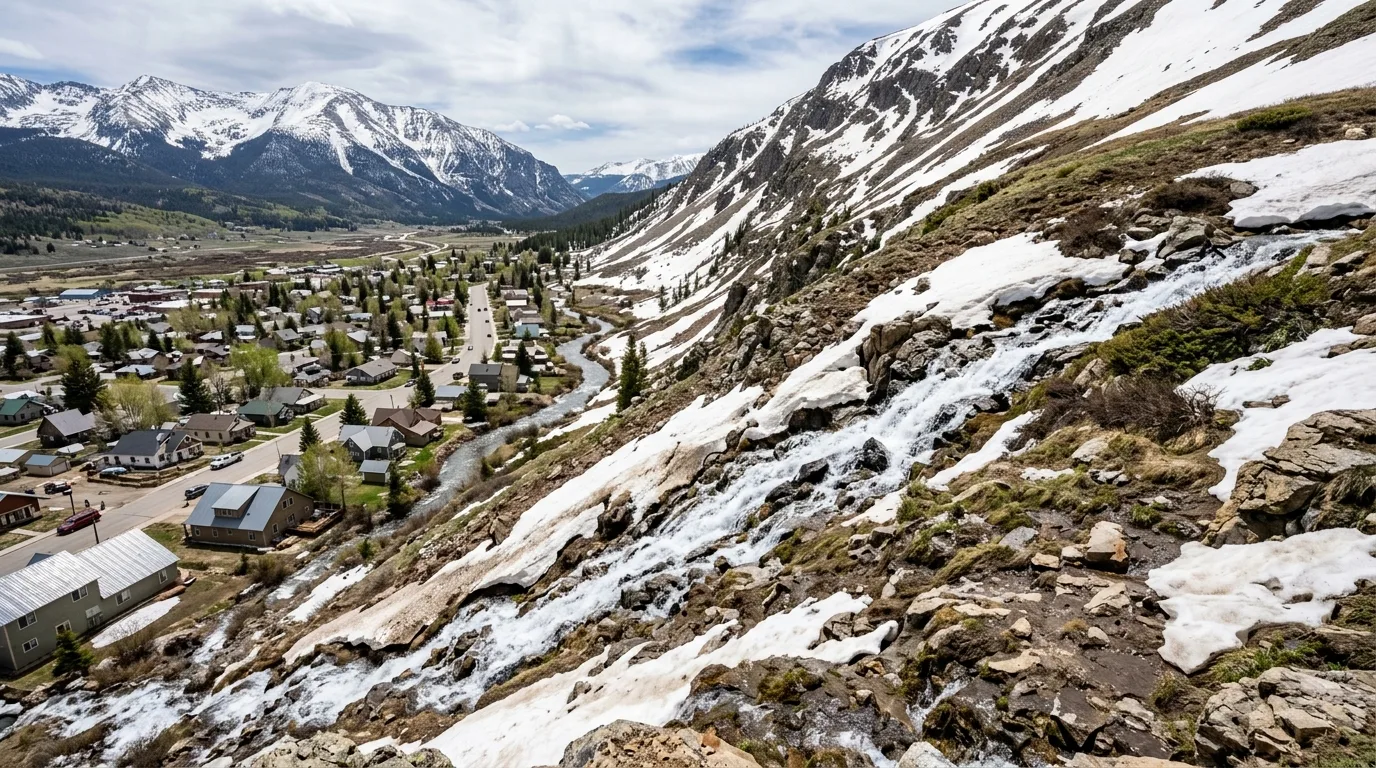
April in Murray averages 7.7 wet days — more than any other month in Salt Lake Valley — and that statistic drives more water damage calls than any single weather event. When those days arrive in succession without time for soils to drain between them, Murray basements flood. In this post, we cover why snowmelt flooding is so predictable in this area, which neighborhoods are most at risk, and what to do the moment water enters your home.
Spring Flooding in Murray? Call 24/7
Murray Water Damage Restoration responds immediately to basement flooding throughout Murray and Salt Lake County. Call (877) 698-1311.
Why Spring Snowmelt Floods Murray Basements
Murray sits on the Salt Lake Valley floor, directly downslope from the Wasatch Range. Every spring, snowpack accumulated from November through February begins melting and flowing downhill into the valley. The Wasatch Front snowpack — which can reach several feet in a good winter — releases water over weeks rather than days, maintaining a steady inflow into valley soils throughout March, April, and May.
During that period, Murray’s baseline soil moisture is already elevated from winter precipitation. The result is rapid soil saturation that leaves no capacity for additional absorption. Spring rain events — common in March and April — then add to an already-saturated soil profile rather than being absorbed. Water builds up in the soil column and the only places it can go are drainage systems, storm sewers, and any gap it can find in your foundation.
The critical factor in Murray is the clay soil. Unlike sandy or gravelly soils that drain readily, the expansive clay throughout Salt Lake County holds water for days after a rain event, maintaining hydrostatic pressure against basement walls long after the storm has passed. This is why Murray basement flooding events often continue for 24 to 48 hours even after the rain stops — the soil is still slowly releasing water against your foundation.
Types of Spring Basement Flooding
Hydrostatic pressure seepage: Water saturates the soil surrounding the foundation, and pressure drives it through cracks in the foundation wall or through the joint where the wall meets the floor slab. This appears as seeping water at the base of foundation walls or through floor cracks, and is the most common form of spring basement flooding in Murray.
Window well overflow: Window wells without proper drainage covers fill with snowmelt and rainwater during spring storms. When they overflow, water flows directly through the window frame into the basement. A window well that has never failed can overflow during unusually heavy spring rain.
Floor drain backflow: Municipal storm sewers serve Salt Lake County can become overwhelmed during peak spring runoff. When the municipal system is at capacity, water backs up through basement floor drains — a particularly problematic scenario because it may carry contaminants.
Foundation crack intrusion: Freeze-thaw cycles during winter create new cracks in poured concrete and block foundations throughout Murray neighborhoods. These cracks are often first discovered when spring meltwater finds them as a pathway into the basement.
Practical Uses: Preparing Before the Flood Season
-
Inspect your foundation walls: Walk your basement perimeter in late February, before the spring season begins, and look for new cracks or efflorescence (white mineral deposits indicating past water penetration). Seal hairline cracks with hydraulic cement or polyurethane injection before the season starts.
-
Clear all window well covers and drains: Remove debris from window wells and verify that any drainage holes at the bottom are unobstructed. Install bubble covers on vulnerable window wells in Murray’s older homes — particularly those near grade level in the Murray Southeast and Murray East neighborhoods where drainage runs toward the house.
-
Test your sump pump: Pour a bucket of water into the sump pit to trigger the float switch and confirm the pump operates correctly. If it has not been tested in over a year, do it before March. A sump pump that fails during peak spring runoff can allow hundreds of gallons into a finished basement overnight.
-
Check gutters and downspouts: Clear gutters of debris from fall and winter and confirm downspouts direct water at least 6 feet away from the foundation. Short or clogged downspouts are a leading cause of concentrated water intrusion at Murray foundation corners.
-
Know where your water shutoff is: If a pipe fails during the same spring storm that’s flooding your basement, you need to stop water flow immediately. Know the location of your main shutoff valve before you need it.
How the Flooding Process Works
Once spring soil saturation begins, the flooding progression is relatively predictable. Ground moisture levels near the Wasatch Front rise through February as snowmelt begins. By late March, valley soils in Murray and throughout Salt Lake County are at or near field capacity — meaning they cannot absorb significantly more water without the excess running off or building up.
Is Your Murray Basement at Risk This Spring?
Don't wait for flooding to find out. Murray Water Damage Restoration offers free assessments. Call (877) 698-1311 or request online.
When the combination of snowmelt and spring rain arrives in April, hydrostatic pressure against foundation walls can build to the equivalent of several feet of water pressing outward — enough force to push water through concrete. Homes with older waterproofing membranes, unrepaired cracks, or below-grade windows without proper drainage are most vulnerable. The entire flooding cycle from initial soil saturation to basement water intrusion can occur in less than 24 hours during a heavy spring rain event on already-saturated ground.
Once water enters, it saturates basement flooring, wicks into drywall and insulation, and begins promoting mold growth within 24 to 48 hours if not extracted and dried professionally. The key intervention point is the moment water enters — not after you’ve tried to manage it yourself with towels and fans.
Cost Factors for Spring Basement Flood Cleanup
Spring basement flooding in Murray typically costs between $1,383 and $6,378 to remediate professionally — this range covers extraction, structural drying to IICRC S500 standards, and antimicrobial treatment. Smaller events confined to a utility room or single area run $450 to $1,000. Larger events affecting finished basement living space regularly cost $7,000 to $16,000 or more when flooring, drywall, and insulation require replacement.
The main cost variables for spring flood events in Murray are: (1) whether the water is clean groundwater or mixed with sewage from a municipal drain backup — the latter requires Category 3 biohazard protocols; (2) the square footage of finished basement space affected; and (3) how long water stood before extraction began. Every hour of delay allows water to wick further into walls and flooring, expanding the affected area and the remediation scope.
Standard Utah homeowners insurance policies cover sudden and accidental water damage from a specific event. Gradual seepage that accumulated over time may not be covered. Knowing the difference — and having documentation from a professional restoration company — matters when filing a claim.
Frequently Asked Questions
Why does my Murray basement flood every spring but not at other times?
Spring is uniquely risky because it combines three factors that rarely align at other times of year: large volumes of snowmelt entering the valley from the Wasatch Range, elevated spring rainfall, and already-saturated clay soils with no remaining absorption capacity. Summer storms can cause flooding too, but the soil usually has some capacity to absorb water before it reaches saturation. Spring soil is already saturated when the rain starts, which means runoff and hydrostatic pressure build immediately.
How do I know if my foundation crack is serious enough to cause flooding?
Any crack that shows efflorescence (white mineral staining) or that has darkened over time from moisture has already allowed water penetration — even if you haven’t seen standing water yet. Horizontal cracks in basement walls are more serious than vertical cracks and indicate lateral soil pressure. Cracks wider than 1/4 inch warrant professional assessment. Before spring begins in Murray, have any questionable cracks evaluated and sealed.
Will my homeowners insurance cover spring basement flooding?
Standard Utah homeowners policies cover water damage from sudden and accidental events — a pipe failure, a specific storm event, or equipment failure. Gradual seepage that occurred over an extended period is typically excluded. Flood damage from rising groundwater is specifically excluded from standard policies; flood insurance (through NFIP or private flood insurers) is a separate policy. Contact your insurance carrier to understand your specific coverage before the spring flood season begins.
Spring Flood Cleanup in Murray — Call Any Time
Murray Water Damage Restoration handles basement flood cleanup throughout Murray, Taylorsville, Millcreek, and Salt Lake County. 24/7 emergency response.
Related: