Water Damage vs Flood Damage: What Murray Homeowners Must Know
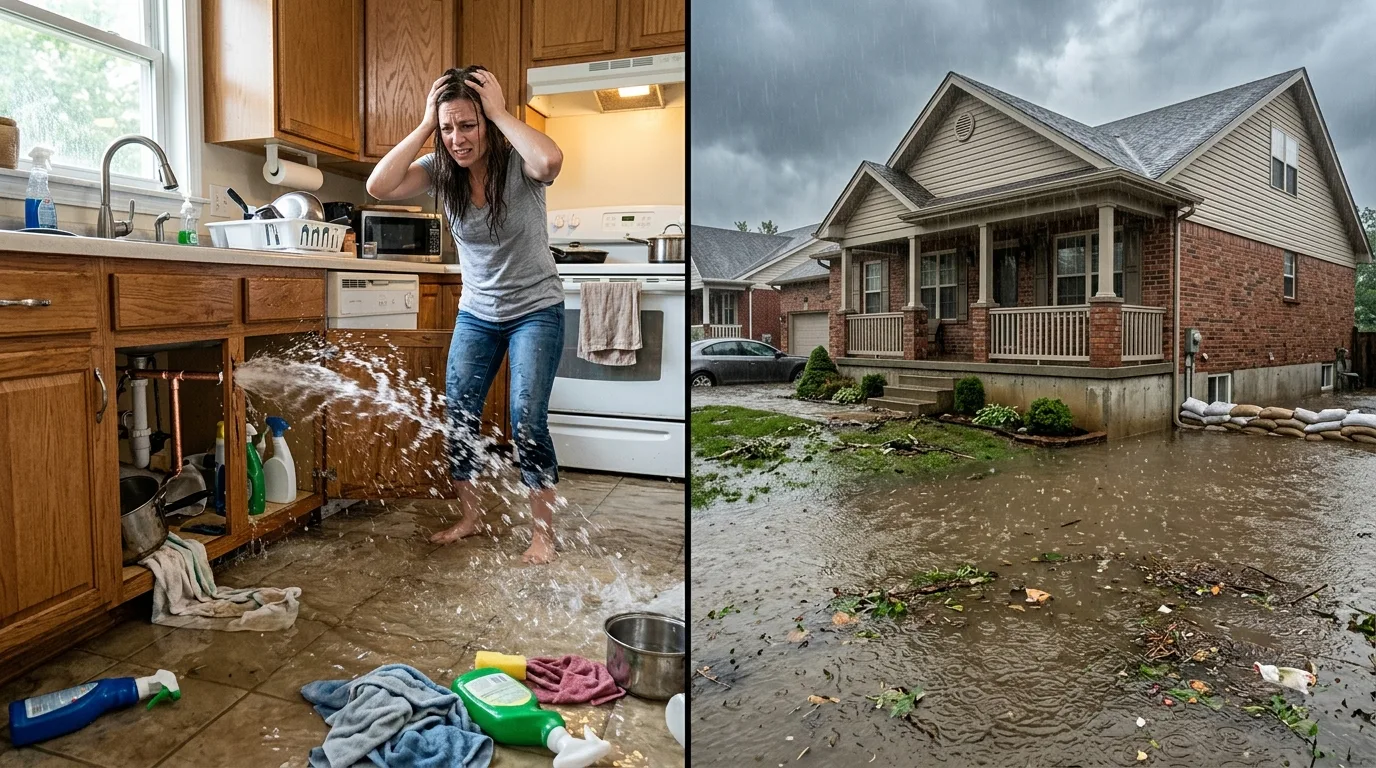
Are you covered for what just happened to your Murray home? Whether you’re dealing with a flooded basement or a burst pipe, the answer depends on how your insurance company categorizes the water event — and the difference can mean thousands of dollars. Many Murray homeowners are surprised to discover that “flood damage” and “water damage” are distinct categories with very different insurance treatment. In this post, we explain the distinction in plain terms, what it means for Salt Lake County homeowners, and how to document your event to support the strongest possible claim.
Water Damage or Flood? We Handle Documentation Either Way
Murray Water Damage Restoration works with all Utah insurance carriers and helps homeowners document their claims correctly. Call (877) 698-1311.
The Core Distinction: Water Source Matters
The defining factor in water vs. flood damage is the source of the water and how it entered the property. Here is how the insurance industry defines each:
Water damage (covered by standard homeowners policies): Water that originates from a source within the home — a burst pipe, an overflowing appliance, a leaking water heater, a roof leak from a specific storm, or a toilet overflow. The water comes from a system or event that is specific to the property, not from an external environmental flooding event.
Flood damage (not covered by standard homeowners policies, requires separate flood insurance): Water that enters from outside the property due to a general condition of flooding — rising groundwater, surface water from a storm, overflow from a creek or drainage channel. The defining legal concept is that flood damage involves water coming “from outside” and affecting a “general condition” — meaning multiple properties, not just yours.
For Murray homeowners, this distinction has real consequences during spring snowmelt season. Water that enters your basement because a pipe froze and burst is water damage — covered by your standard policy. Water that enters your basement because the water table rose during spring runoff and pushed through foundation cracks is technically flood damage — and may not be covered without a separate flood insurance policy.
Types of Water Events Murray Homeowners Experience
Burst pipe (water damage): Covered by standard Utah homeowners policies as a sudden and accidental event. Document the pipe failure point, the water path, and all damage areas. Emergency water extraction is covered.
Appliance overflow (water damage): Washing machine, dishwasher, water heater, or refrigerator water line failure. Covered by standard policies. Document the appliance failure point and the affected area.
Roof leak from storm (water damage): When a specific storm event causes roof damage that allows water entry, the resulting damage is typically covered. The distinction: gradual roof deterioration that allows water entry is not covered; storm-caused sudden damage that creates a new leak is covered.
Sewage backup (often excluded from standard policies): A sewer backup is often excluded from standard homeowners coverage but is available as an endorsement (add-on) for relatively low cost. Murray homeowners with older cast iron drain lines should verify whether their policy includes sewage backup coverage. The cost of Category 3 cleanup without coverage can be significant — $7 to $7.50 per square foot for sewage-contaminated areas.
Groundwater intrusion during spring runoff (flood damage): Water that enters through foundation cracks or floor drains because of elevated groundwater during Murray’s spring wet season may be classified as flood damage rather than water damage. This distinction is policy-specific and fact-dependent — how the water entered the property and whether it was part of a general flooding condition matters.
Practical Documentation Steps for Murray Homeowners
-
Document the water source before cleanup begins: Photograph the pipe failure point, the appliance that failed, the roof penetration, or the foundation entry point. This documentation establishes the cause of loss, which determines coverage category.
-
Photograph water levels and damage extent: Take photos showing water depth, waterlines on walls, affected flooring, and any visible structural damage. Time-stamp all photos.
-
Note weather conditions: Record temperature, precipitation, and whether nearby properties also experienced flooding. This information helps establish whether the event was a localized equipment failure (water damage) or part of a general flooding condition (flood damage).
-
Obtain a written assessment from the restoration company: Professional documentation from an IICRC-certified restoration company that identifies the cause of loss and categorizes the water type (Category 1, 2, or 3) carries significant weight with insurance adjusters.
-
File claims promptly: Utah law requires insurers to acknowledge claims within 10 business days. File as soon as the event is documented — do not wait until restoration is complete.
Murray Flood Cleanup — IICRC Certified Documentation
Our team provides complete cause-of-loss documentation to support your Utah insurance claim. Call (877) 698-1311 for immediate response.
How This Affects Murray Properties Specifically
Murray’s position on the Salt Lake Valley floor and its clay-heavy soil make the water damage vs. flood damage distinction particularly relevant during spring. When significant snowmelt and rain events raise the water table in April, homes throughout Murray’s older neighborhoods — particularly in Murray Southeast, City Center, and the Atwood area near the I-15 corridor — can experience foundation intrusion events that may be ambiguous from a coverage standpoint.
The sewage cleanup dimension adds another layer: when the Murray municipal sewer system backs up during peak spring runoff, the resulting basement event is both a flood event (municipal system overwhelmed) and a sewage event (Category 3 contamination). Without sewage backup coverage endorsed onto your policy, this specific scenario may have no coverage at all. Salt Lake County’s older combined sewer infrastructure makes this risk real for Murray homeowners — check your policy now rather than after an event.
Cost Factors
Without insurance coverage, water damage cleanup in Murray costs the homeowner directly: $1,383 to $6,378 for standard residential events, $7,000 to $16,000 or more for major losses. Sewage events at Category 3 pricing run $7 to $7.50 per square foot for the affected area plus biohazard material disposal.
Flood insurance through the National Flood Insurance Program (NFIP) costs $700 to $1,400 per year for most Murray residential properties, depending on flood zone designation and coverage limits. Sewage backup endorsements typically cost $50 to $200 per year added to a standard homeowners policy. Either cost is significantly less than one uninsured flooding event. For details on standard homeowners coverage, read our guide on does homeowners insurance cover water damage in Utah.
Frequently Asked Questions
My basement flooded during a spring rainstorm — is that covered by my Utah homeowners insurance?
It depends on the cause. If a specific pipe or drain failed during the storm, it may be covered as water damage. If water entered because the municipal storm sewer was at capacity and backed up through your floor drain, it may be covered if you have sewage backup coverage. If water entered because the water table rose and pushed through your foundation walls during a general flooding condition, it may not be covered by a standard policy — flood insurance would apply. Document the entry point and call your carrier to discuss the cause of loss.
How do I add flood insurance to my Murray property?
Flood insurance is available through the National Flood Insurance Program (NFIP) via any licensed insurance agent in Utah. Coverage has a 30-day waiting period before it takes effect, so it must be purchased well before flood season. For properties in designated Special Flood Hazard Areas (SFHAs), NFIP coverage may be required by your mortgage lender. Check your flood zone designation at FEMA’s Flood Map Service Center.
What is sewage backup coverage and do I need it in Murray?
Sewage backup coverage is an endorsement (add-on) to a standard homeowners policy that covers the cleanup and restoration costs from a sewer or drain backup event. Given Murray’s older sewer infrastructure and the risk of municipal system overload during spring runoff, sewage backup coverage is worth having for most Murray homeowners. The annual cost is minimal relative to the cleanup cost of an uncovered Category 3 event.
Water Damage Documentation in Murray — Call 24/7
Murray Water Damage Restoration provides professional documentation for insurance claims throughout Murray and Salt Lake County. Call (877) 698-1311.
Related: