Freeze-Thaw Cycles: Winter Water Damage Risk in Murray, UT
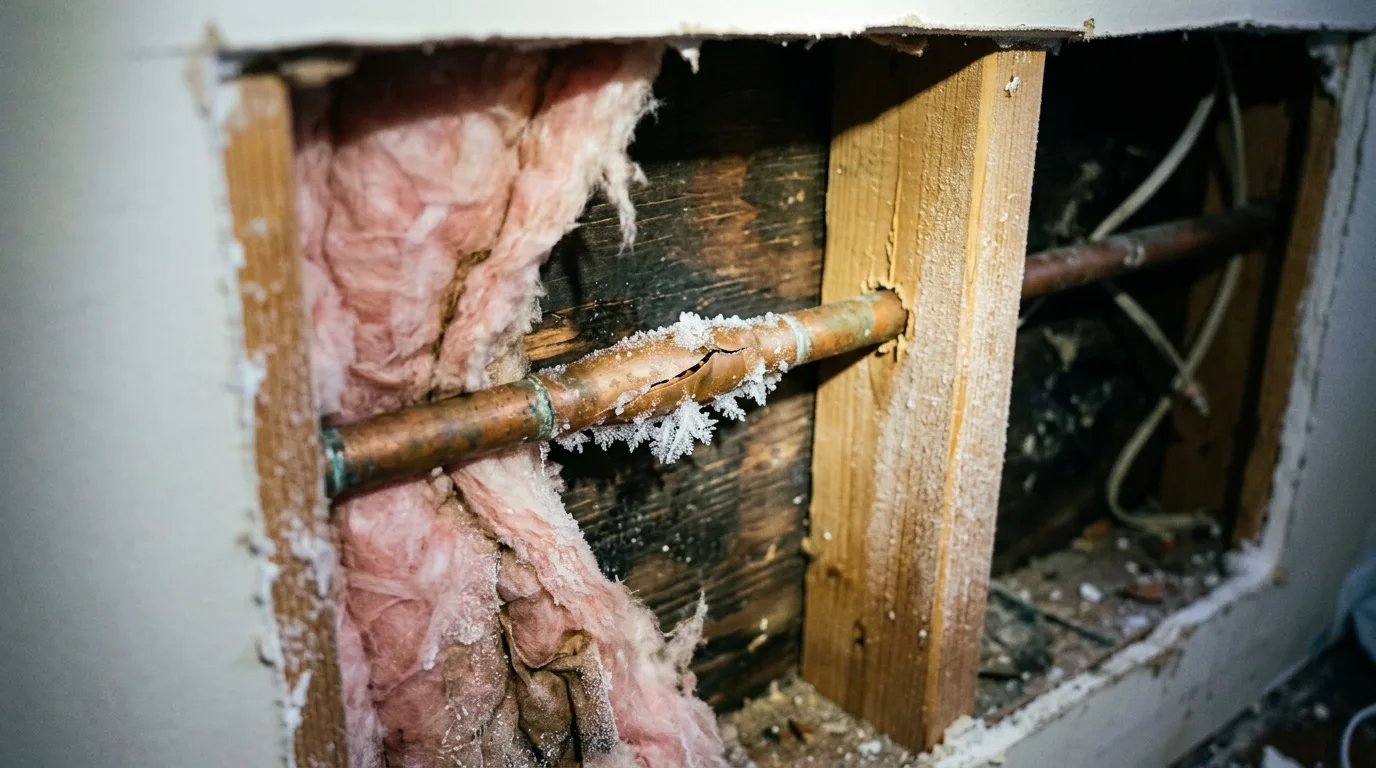
Utah averages more than 1,000 freeze-thaw cycles per year in many Salt Lake Valley locations — and each one is a stress test for water supply lines throughout Murray homes. That statistic, compiled from long-term temperature records in Salt Lake County, explains why burst pipe calls in the Murray area peak during January and February and why winter is consistently the most expensive season for residential water damage in the valley. In this post, we cover how freeze-thaw damage works at the material level, which homes in Murray are most at risk, and what to do before the first hard freeze each year.
Winter Pipe Burst in Murray? We Respond 24/7
Murray Water Damage Restoration handles emergency water extraction and restoration throughout Salt Lake County. Call (877) 698-1311.
How Freeze-Thaw Cycles Damage Pipes
Water’s physical properties make freeze-thaw cycling particularly destructive. When water freezes, it expands by approximately 9% in volume. In a confined supply line — whether copper, CPVC, or PEX — that expansion creates internal pressure that can reach thousands of pounds per square inch. Most residential pipe materials can withstand one or a few freeze cycles before fracturing, but repeated cycling causes progressive fatigue at the weakest points: fittings, elbows, and any location where the pipe is already stressed from installation.
Murray’s winter temperature pattern amplifies this damage mechanism. Rather than experiencing a sustained deep freeze that keeps ice stable inside pipes, the Salt Lake Valley sees temperatures that frequently cross the 32°F threshold in both directions within the same day. Temperatures drop below freezing overnight, ice forms in vulnerable pipe sections, temperatures recover above freezing during the day, and ice melts — placing water under normal pressure against a pipe wall that may now have a micro-fracture from the previous freeze. The cycle repeats the following night, progressively weakening the same pipe sections.
Which Murray Homes Are at Highest Risk
The housing stock in Murray’s older neighborhoods carries the highest risk for freeze-thaw pipe failures. Mid-century construction throughout the Atwood neighborhood, Murray West, and portions of City Center was built to standards that placed supply lines in exterior wall cavities without the insulation buffers now standard in modern construction. These pipes are directly exposed to outdoor temperature swings during cold snaps.
Specific risk factors in Murray homes include: supply lines in exterior walls facing north or west (the coldest exposures); pipes in unheated crawl spaces; supply lines running through uninsulated garage walls or attached utility structures; and any pipe adjacent to a foundation wall that is not interior-insulated. Homes built before 1970 throughout the Murray area are statistically more likely to have one or more of these conditions.
Vacation properties and rental homes in Murray are particularly vulnerable because no one is present to detect slow-rising damage. A pipe that bursts at 2 AM in an occupied home is discovered in minutes. The same pipe in a vacant rental near Wheeler Historic Farm may run for 12 or more hours before anyone notices — transforming a $2,000 extraction event into a $12,000 structural restoration.
Types of Freeze-Thaw Water Damage in Murray
Supply line burst: The most common and most severe. A fracture in a pressurized supply line releases water continuously until the main supply is shut off. A 3/4-inch supply line at typical municipal water pressure releases approximately 6 to 8 gallons per minute — enough to flood a basement in less than an hour.
Ice dam roof damage: Murray’s combination of snowfall (averaging 40 inches per year) and freeze-thaw temperature cycling creates ice dams along roof eaves. Snow melts from the warmer roof deck, runs to the cold eave overhang, and refreezes. The ice backup forces water under shingles and into ceiling and wall assemblies — a different entry point than pipe failures, but driven by the same freeze-thaw mechanism.
Foundation crack propagation: Water in existing foundation cracks freezes and expands, widening the crack incrementally with each cycle. Over a winter with many freeze-thaw cycles, a hairline crack may grow to a visible fracture — creating a new spring flooding pathway that was not there the previous spring.
Hose bib failures: Exterior hose bibs (outdoor faucets) that were not drained before winter are a common and frequently overlooked failure point in Murray homes. When frozen, the bib may fracture at the connection inside the wall rather than at the exterior fitting — causing water to spray inside the wall cavity when the main supply is turned on in spring.
Practical Prevention for Murray Winters
-
Insulate all exposed pipes before November: Pipe insulation sleeves are inexpensive and take minutes to install. Prioritize pipes in exterior wall cavities, crawl spaces, and any unheated utility spaces. In Murray’s older homes, adding insulation to the wall cavity behind supply lines is a more permanent solution.
-
Drain exterior hose bibs before the first freeze: Disconnect and store garden hoses, close the interior shutoff for each hose bib, and open the exterior bib to drain any water in the line. This simple step eliminates one of the most common winter pipe failure points.
-
Set the thermostat to 55°F minimum when traveling: Properties left below this threshold during a Salt Lake Valley cold snap will experience frozen pipes. This is especially critical for Murray rental properties and vacation homes that may be unoccupied for extended periods.
-
Know your main water shutoff location before winter: Practice turning the valve so you can do it quickly under stress. In a pipe burst emergency, every second of water flow adds to the restoration scope and cost.
-
Check vacant properties within 24 hours of any hard freeze event: A 24-hour check-in can limit a burst pipe event to a manageable extraction rather than a major structural restoration.
Winter Water Damage Risk in Murray?
Murray Water Damage Restoration handles emergency burst pipe response and structural drying throughout Salt Lake County. 24/7 emergency line available.
How Winter Water Damage Restoration Differs from Spring Events
Winter water damage events in Murray present different challenges than spring flooding. Spring basement flooding is typically clean water (Category 1) from groundwater sources. Winter pipe bursts are also usually Category 1, but the events often occur in locations — inside finished walls, above finished ceilings — that require more extensive demolition to access for drying.
The material interaction is also different in winter. Murray’s clay soils during winter contain ice crystals at depth, which means moisture from a burst pipe that reaches the foundation may freeze and thaw repeatedly before drying is complete. Structural drying during sub-freezing outdoor temperatures requires that drying equipment create enough heat inside the affected zone to drive evaporation — a consideration that affects both equipment selection and drying timelines.
Insurance documentation for winter pipe bursts follows the same protocol as any other water damage event, but the cause-of-loss narrative is particularly important: clearly documenting the freeze-thaw mechanism as the cause of the pipe failure establishes the event as a covered sudden and accidental loss under most Utah homeowners policies.
Cost Factors
The cost of winter water damage restoration in Murray depends primarily on how long the pipe ran before detection. Events discovered within an hour typically cost $1,000 to $3,000 combining extraction and structural drying. Events discovered after several hours or overnight can cost $5,000 to $15,000 depending on the area affected. The per-square-foot cost of cleanup follows the same Category 1 pricing: $3 to $4 per square foot for clean water damage in Salt Lake County.
The plumbing repair itself runs $200 to $1,000 depending on pipe location and access, and typically needs to be completed before drying equipment can run in the same space. Most Utah homeowners policies cover burst pipe damage — we handle direct billing and provide complete documentation for all major carriers.
Frequently Asked Questions
At what outdoor temperature do pipes start freezing in Murray?
Pipes in uninsulated or exterior-wall locations begin to freeze when the air temperature around them drops to 20°F or below for an extended period — typically 6 or more hours. Pipes in well-insulated interior walls rarely freeze even in very cold weather. The risk zone for Murray is overnight lows below 20°F, particularly when the low holds for several consecutive nights.
Can PEX pipes freeze and burst in Murray?
PEX is more flexible than copper or CPVC and can withstand some freezing without fracturing, but it is not immune to burst failure. Severely frozen PEX can split at fittings and elbows. PEX is a better choice than rigid pipe for freeze-prone locations, but insulation is still required in exterior walls and unheated spaces — flexibility alone does not prevent burst failures.
Is ice dam damage covered by Utah homeowners insurance?
Ice dam damage is typically covered under the dwelling portion of standard Utah homeowners policies when ice dam water intrusion causes damage to the interior of the home — ceiling drywall, insulation, and water damage to rooms below the affected roof area. The ice dam formation itself (as a roof issue) is often excluded, but the resulting water damage is usually covered. Document the damage thoroughly and call your carrier promptly.
Freeze-Thaw Pipe Burst — Murray Water Damage Responds 24/7
We serve Murray, Taylorsville, Sandy, Millcreek, and all of Salt Lake County with emergency burst pipe response and structural drying. Call (877) 698-1311.
Related: