Summer Storm Season in Murray, UT: Protect Your Home From Water Damage
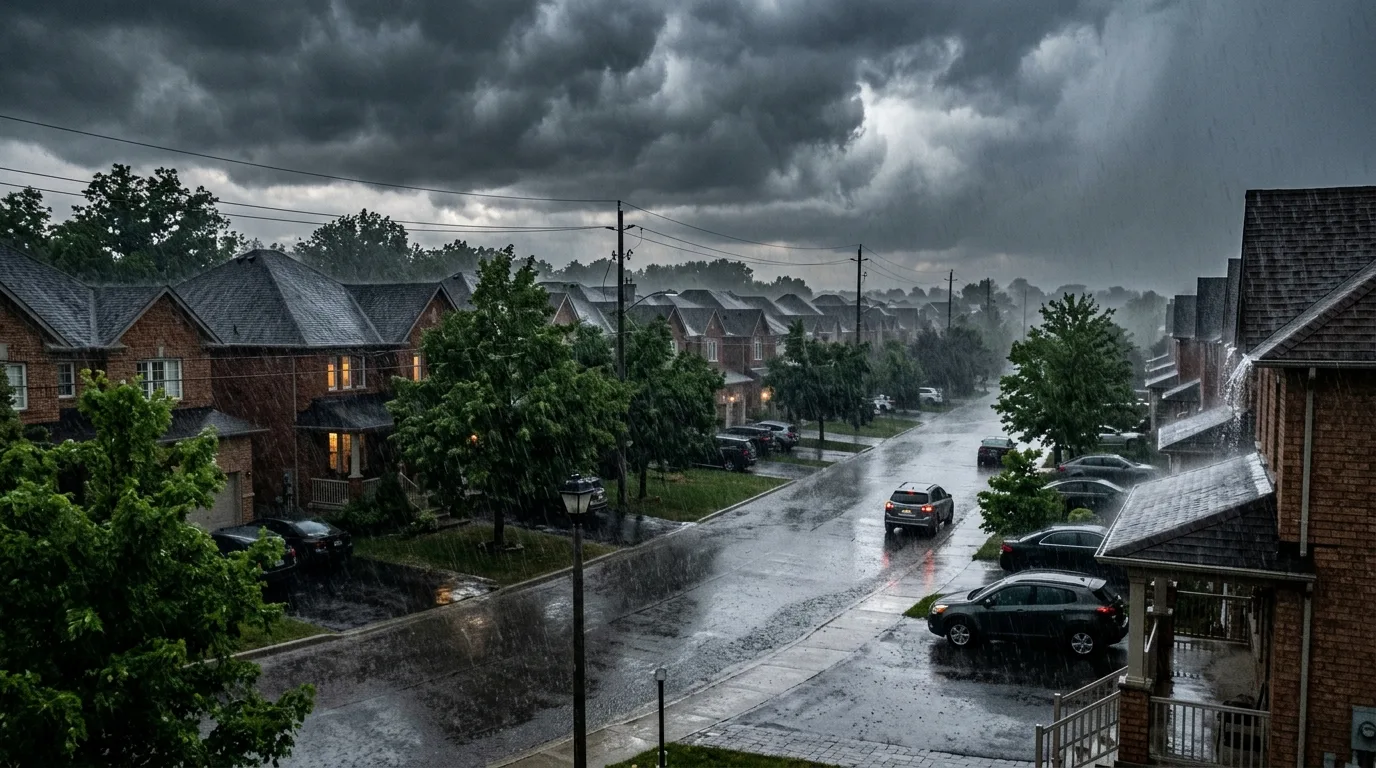
Murray averages fewer than 2 inches of rainfall in June, then receives concentrated monsoon-driven storms from July through September that can drop a month’s worth of rain in a single afternoon. This seasonal shift — from dry conditions to intense, localized precipitation — catches many homeowners off guard. Summer storms in Salt Lake County behave very differently from spring snowmelt: they arrive fast, deposit large volumes of water quickly, and overwhelm drainage systems before soils have any chance to absorb the inflow. In this post, we cover what summer storm water damage looks like in Murray, what protective steps matter most, and when to call for emergency response.
Summer Storm Damage in Murray? We Respond 24/7
Murray Water Damage Restoration handles emergency flood cleanup throughout Salt Lake County. Call (877) 698-1311.
How Murray’s Summer Storm Pattern Differs From Spring Flooding
Murray’s semi-arid climate shifts to a monsoonal weather pattern each July as subtropical moisture flows north from the Gulf of Mexico. These moisture plumes produce afternoon and evening thunderstorms that can deliver intense, concentrated rainfall events — sometimes exceeding 1 inch per hour — on ground that was completely dry in the morning. In spring, flooding is driven by sustained, slow moisture accumulation in saturated soils. In summer, flooding is driven by rapid surface runoff on dry or minimally permeable ground.
The two patterns require different preparedness responses. Spring flooding is largely a foundation and drainage challenge — keeping hydrostatic water away from basement walls. Summer storm flooding is primarily a surface drainage and roof challenge — managing fast-moving surface water before it concentrates against your home and enters through ground-level openings like window wells, exterior doorways, and inadequately covered basement entry points.
Murray’s urban infrastructure along State Street, the Fashion Place Mall corridor, and the I-215 interchange area creates additional runoff concentration during intense summer storms. Impervious surfaces direct large volumes of water rapidly toward low-lying residential areas. Homes in the Murray East and Murray Southeast neighborhoods that are downslope from commercial or heavily paved areas face additional summer storm risk beyond what their lot drainage characteristics alone would suggest.
Types of Summer Storm Water Damage in Murray
Window well flooding: Intense summer rain overwhelms window well drainage capacity — even properly sized wells with covers can be overtopped by an extreme storm event. Water enters through window frames into basement window openings, often appearing as a sudden rush rather than a slow seep.
Gutter overflow and concentration: Gutters that handle normal spring rain events can be overwhelmed by summer storm intensity. Concentrated overflow deposits water against the foundation at specific points, creating localized intrusion risk greater than spring seepage.
Roof leak activation: Roof penetrations, flashing failures, and damaged shingles that may not have leaked during moderate spring rain can fail during a high-intensity summer storm when rain volume and driving wind combine to force water through minor defects.
Sliding door and window well entry: Ground-level entries — sliding glass doors, walk-in basement doors, and above-grade basement windows — can allow water entry when surface runoff concentrates against them during an intense event.
Storm sewer backflow: During extreme summer rainfall events, Salt Lake County’s storm sewer infrastructure can reach capacity, causing backflow through basement floor drains and sump pits. This is a different mechanism from spring runoff backup and typically affects homes with older or inadequately protected drain connections.
Practical Summer Storm Protection for Murray Homes
-
Inspect roof and flashings annually before July: Summer storm season stresses roofing systems that may have minor defects from winter ice dam formation or spring hail. Have a roofing contractor inspect flashings around chimneys, skylights, and vents — these are the most common failure points during intense summer storms.
-
Clean gutters after spring debris accumulates: Gutters cleared in February for spring flood season may have re-accumulated debris from spring leaf-out. Clear them again in late June before monsoon season begins. Clogged gutters during a summer downpour overflow completely rather than directing water to downspouts.
-
Add covers to all ground-level window wells: Window wells that survived spring flooding may be overwhelmed by summer storm intensity. If any wells are below-grade and uncovered, install covers before July.
-
Direct downspouts away from the house: Extended downspouts installed for spring flood protection are equally important for summer storm protection. Confirm all extensions are in place and directing water away from the foundation before monsoon season begins.
-
Verify sump pump is operational for summer storms: The sump pump is not just a spring tool. Summer storm events can send large volumes of water into sump pits rapidly. Confirm the pump is operational and consider whether a backup battery unit is appropriate given your drainage load.
Summer Storm Flood Cleanup in Murray
Murray Water Damage Restoration responds 24/7 to summer storm water damage throughout Murray and Salt Lake County. Call (877) 698-1311.
How Summer Storm Damage Restoration Works
Summer storm water damage restoration follows the same IICRC S500 protocol as any other water event: water categorization, extraction, moisture mapping, structural drying, and clearance verification. The difference in summer events is often the speed of onset — a summer storm may produce flooding in minutes rather than hours, and the call for emergency response often happens before the storm has fully passed.
Cleanup timeline after a summer storm basement event in Murray typically runs 5 to 7 days from initial extraction through structural drying clearance. This is comparable to spring flood events of similar scope. Insurance documentation follows the same format — cause of loss, moisture logs, and scope of work for the adjuster.
One consideration specific to summer storm events: standing water from a summer storm that contains surface runoff may include contamination from street drainage, making it a Category 2 or Category 3 event rather than the clean Category 1 water typical of a supply line burst. Our team assesses water category on arrival to determine appropriate protocols before extraction begins.
Cost Factors
Summer storm water damage restoration in Murray follows the same general pricing as other residential water events across Salt Lake County: $1,383 to $6,378 for standard losses, with larger events reaching $7,000 to $16,000 or more. Category 2 or 3 contamination from surface runoff adds to the cost due to antimicrobial requirements and material disposal protocols.
Most Utah homeowners policies cover sudden storm-caused water damage. However, if the water entered through gradual ground intrusion rather than a specific storm event, coverage may be questioned. Documenting the timing and weather conditions is particularly important for summer storm claims — we provide cause-of-loss documentation that establishes the specific event as the source.
Frequently Asked Questions
How quickly can a summer storm flood a Murray basement?
A summer storm in Murray can deliver 0.5 to 1 inch of rain in 30 to 45 minutes during a peak monsoon event. Depending on drainage conditions and the depth of your basement below grade, water can begin entering through window wells or door thresholds within minutes of heavy rainfall onset. Unlike spring seepage events that build gradually over hours, summer storm events can flood a basement room to several inches before the storm has passed. Speed of response after the storm matters significantly.
Does my Utah homeowners insurance cover summer storm flooding?
Storm-caused sudden water damage — including wind-driven rain entering through a damaged roof or surface water entering through a covered storm opening — is generally covered by standard Utah homeowners policies. Surface flooding from rising storm water that enters your home as a general flooding condition is covered by flood insurance, not standard homeowners policies. The entry point and cause are key: storm damage that affects your specific property due to the storm event is generally covered; rising water affecting a general area is not.
What should I do first when my Murray basement floods during a summer storm?
Ensure the storm has passed and it is safe to be in the area. If standing water is present, do not enter any area where electrical equipment may be submerged. Shut off electricity to the affected areas at the circuit breaker if it’s safe to reach. Call Murray Water Damage Restoration at (877) 698-1311 for immediate dispatch. Photograph all visible damage before any cleanup begins. Do not run a shop vac or consumer fans in an area with potentially active electrical hazards.
Summer Storm Damage in Murray — Emergency Response 24/7
Murray Water Damage Restoration serves Murray, Taylorsville, Sandy, Millcreek, and all of Salt Lake County. Call (877) 698-1311 for immediate response.
Related: